Fire Damage Debris Removal in New Braunfels
After a fire, burned materials, charred contents, damaged drywall, and water-saturated debris must be safely removed before structural cleaning and restoration can begin. Fire debris can include sharp, unstable, contaminated, and heavy materials that require careful handling. Our New Braunfels restoration team performs controlled fire debris removal to prepare affected areas for further cleanup.
Fire damage debris removal is the process of safely clearing burned materials, charred contents, damaged drywall, and firefighting water-saturated debris from a fire-impacted property. Removal prepares the structure for soot cleaning, drying, and restoration. Debris may include sharp, unstable, or contaminated materials that require professional handling rather than homeowner removal.
What Fire Debris Includes & Why Removal Matters
Fire debris is a broad category that includes everything damaged by the fire and suppression efforts. Charred building materials—drywall, framing, ceiling tiles, flooring—mix with destroyed contents, melted plastics, broken glass, and water-saturated insulation. This debris is often heavy, unstable, and contaminated with soot, combustion compounds, and firefighting water.
Removing debris is a necessary first step before structural cleaning can proceed. Soot and smoke residue coat debris surfaces, and disturbing this material without proper containment spreads contamination to previously unaffected areas. Professional removal uses controlled methods to contain dust and soot during the clearing process.
Fire debris also presents safety hazards. Charred structural materials may be unstable. Broken glass and sharp metal edges cause injury. Water-saturated materials are heavy and can collapse. Burned plastics and synthetic materials may release irritating compounds when disturbed. These hazards make professional removal essential rather than a homeowner task.
What is removed during fire debris cleanup?
Fire debris cleanup removes charred building materials such as drywall and ceiling tiles, destroyed contents and furniture, burned flooring, melted plastics, broken glass, water-saturated insulation, and other materials damaged beyond restoration. The process prepares the structure for soot cleaning, drying, and restoration by clearing all unsalvageable materials safely.
Call now to check immediate availability for fire damage debris removal in new braunfels.
Call 830-356-3743Types of Fire Debris We Remove
We identify and categorize fire debris to ensure safe, controlled removal that prepares the structure for restoration.
Charred Drywall & Ceilings
Burned and heat-damaged drywall and ceiling materials are removed to expose framing for inspection. These materials are often soot-coated and structurally compromised.
Destroyed Contents
Furniture, appliances, and personal belongings damaged beyond restoration are cataloged and removed. Salvageable items are separated for contents cleaning.
Burned Flooring
Charred carpet, damaged hardwood, and delaminated laminate are removed to expose the subfloor for drying and evaluation after firefighting water exposure.
Wet Insulation
Insulation saturated by firefighting water or contaminated with soot cannot be cleaned or dried and must be removed from wall cavities and attics.
Melted Plastics & Synthetics
Melted synthetic materials can release irritating compounds when disturbed. These are removed with appropriate precautions to protect indoor air quality.
Sharp & Unstable Materials
Broken glass, charred framing, and collapsed materials present injury and structural hazards. Professional removal ensures these are cleared safely.
Do not attempt to remove fire debris yourself. Materials may be structurally unstable, sharp, or contaminated. Professional removal uses containment methods to prevent soot and debris from spreading to unaffected areas of the property.
Fire Debris Removal Process
We follow a controlled removal process that prioritizes safety, containment, and preparation for structural restoration.
1. Safety & Structural Assessment
We evaluate the stability of affected areas, identify hazards such as unstable ceilings and sharp materials, and confirm the property is safe for controlled debris removal.
2. Containment Setup
Containment barriers are established between affected and unaffected areas to prevent soot and debris from spreading during the removal process.
3. Salvageable Separation
Belongings that may be restorable are separated from unsalvageable debris and set aside for contents cleaning evaluation.
4. Debris Removal
Charred drywall, destroyed contents, burned flooring, wet insulation, and other unsalvageable materials are carefully removed in manageable sections.
5. Hazardous Material Handling
Melted plastics, broken glass, and potentially irritating materials are removed with appropriate precautions to protect both workers and indoor air quality.
6. Debris Disposal
Removed materials are properly contained and disposed of according to local requirements. Heavily soot-contaminated debris is handled to prevent spreading contamination.
7. Preparation for Restoration
With debris cleared, the structure is ready for soot cleaning, moisture drying, and restoration planning. Exposed framing and subflooring are evaluated for further treatment.
Why Debris Removal Precedes Smoke & Soot Cleaning
Fire debris removal must occur before effective smoke and soot cleaning can begin. Debris surfaces are coated with soot, and attempting to clean around unsalvageable materials is inefficient and ineffective. Removing charred materials first exposes the underlying structure for thorough cleaning and evaluation.
Leaving debris in place also sustains odor. Burned materials and water-saturated contents continuously release smoke compounds and moisture into the air. As long as these materials remain, odor persists and cleaning efforts are undermined. Clearing debris eliminates these active odor and moisture sources.
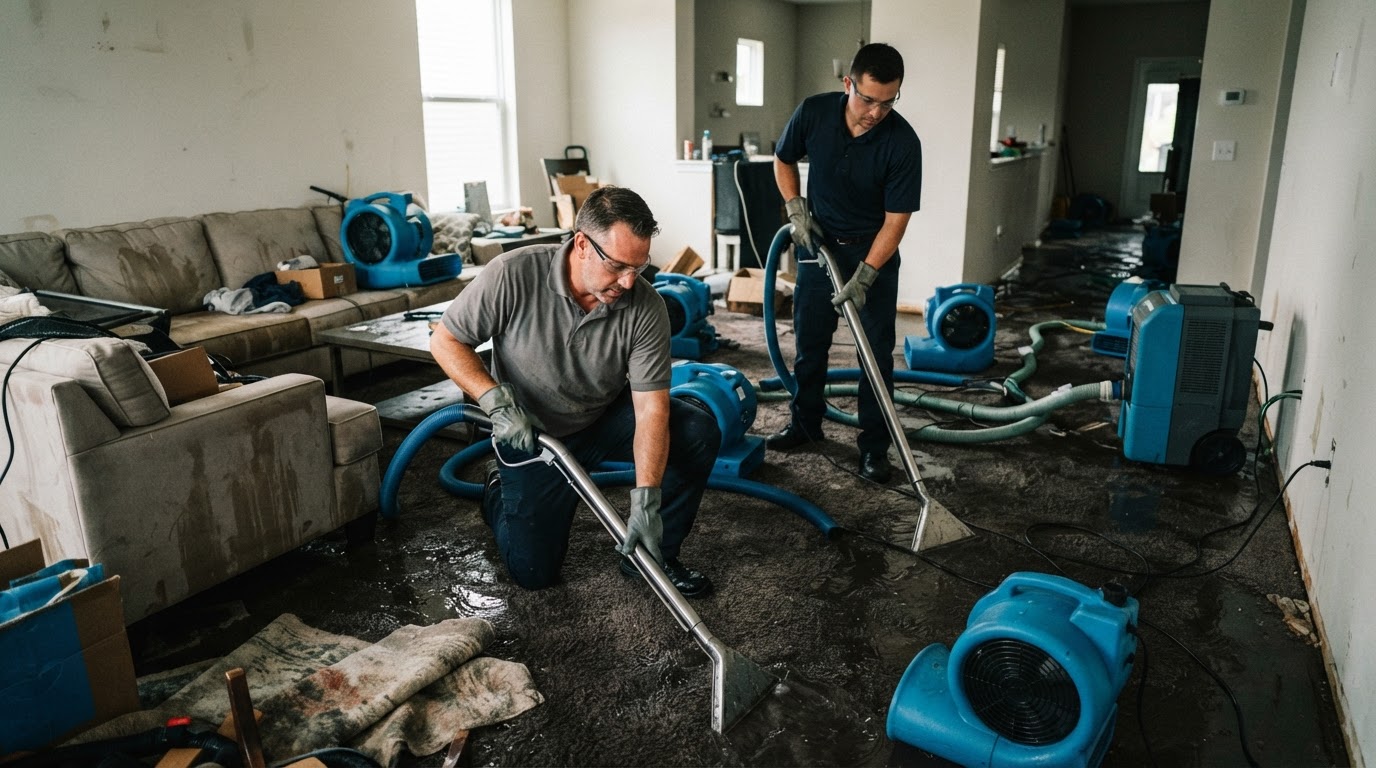
When firefighting water is present, debris removal and water extraction work together. Water-saturated materials like wet insulation and soaked carpet padding must be removed to allow structural drying. Leaving wet debris in place traps moisture against framing and subflooring, creating conditions for secondary damage.
Request water removal assistance for your New Braunfels property.
Frequently Asked Questions About Fire Debris Removal
Review common questions about debris cleanup, safety, and preparation for restoration.
What is removed during fire debris cleanup?
Fire debris cleanup removes charred drywall and ceilings, destroyed contents, burned flooring, wet insulation, melted plastics, broken glass, and other materials damaged beyond restoration. The process clears unsalvageable materials to prepare the structure for cleaning and restoration.
Should I remove burned debris myself?
No. Fire debris can include sharp materials, unstable structural components, and contaminated items that present injury and health hazards. Professional removal uses containment methods to safely clear debris without spreading soot to unaffected areas.
Can soot-covered debris spread contamination?
Yes. Debris surfaces are coated with soot, and disturbing these materials without containment releases particles into the air, spreading contamination to previously clean areas. Professional containment barriers prevent this spread during removal.
Does debris need to be removed before smoke cleaning?
Yes. Debris removal must occur before effective soot and smoke cleaning. Cleaning around unsalvageable materials is inefficient, and debris surfaces continuously release odor and soot. Clearing debris first exposes the structure for thorough treatment.
Can wet fire debris result from firefighting water?
Yes. Firefighting water saturates insulation, carpet padding, and other porous materials, creating wet debris that is heavy and contaminated. These materials must be removed to allow structural drying of framing and subflooring.
What happens after fire debris is removed?
After debris removal, the exposed structure is ready for soot cleaning, moisture drying, and restoration planning. Framing and subflooring are evaluated for further treatment, and salvageable contents set aside during removal proceed to cleaning.
Can damaged drywall be part of fire debris cleanup?
Yes. Charred and heat-damaged drywall is a common component of fire debris. Removing compromised drywall exposes the wall cavity for framing inspection and allows thorough cleaning of hidden soot and moisture.
How are salvageable items handled during debris removal?
Belongings that may be restorable are separated from unsalvageable debris during removal and set aside for contents cleaning evaluation. This ensures potentially salvageable items are not discarded with debris.
Need Fire Debris Removed in New Braunfels?
Contact New Braunfels Water Damage Restoration at 830-356-3743 to check current service availability for fire damage debris removal.
New Braunfels Water Damage Restoration
830-356-3743