Water Damage Cleanup After Firefighting in New Braunfels
The water used to suppress a fire can cause extensive secondary damage throughout a property. Thousands of gallons of firefighting water saturate drywall, flooring, insulation, and structural framing, creating a combined fire and water damage scenario. Our New Braunfels restoration team provides water extraction and structural drying after firefighting to address the moisture damage alongside fire and soot cleanup.
Water damage cleanup after firefighting is the process of extracting standing water left by fire suppression efforts, removing saturated materials such as wet drywall and insulation, and drying structural framing and subflooring. After fire suppression is complete and safe access is appropriate, water extraction and structural drying are necessary in addition to smoke and soot cleanup to prevent secondary moisture damage.
How Firefighting Water Damages a Property
Fire suppression relies on large volumes of water applied under pressure. Hose lines can deliver hundreds of gallons per minute, and much of that water accumulates inside the structure rather than evaporating. This water pools on floors, seeps into wall cavities, saturates ceiling assemblies, and migrates beneath flooring into subflooring and framing.
The damage pattern often extends well beyond the fire room. Water flows downhill, traveling through floor penetrations, along wall cavities, and into lower levels. A second-floor fire can result in ceiling damage on the first floor as water saturates the ceiling drywall from above. Water also migrates laterally beneath flooring into adjacent rooms.
When firefighting water saturates soot-contaminated materials, it creates a particularly challenging restoration scenario. Water dissolves oily soot components, creating a contaminated liquid that spreads residue deeper into porous materials. This means fire and water restoration must be coordinated—cleaning soot without addressing trapped moisture, or drying materials without removing soot, leaves the property incompletely restored.
Why is there water damage after a fire?
Water damage occurs after a fire because the large volumes of water used during suppression saturate building materials. Firefighting water pools on floors, seeps into wall cavities, saturates ceiling drywall, and migrates beneath flooring into subflooring and framing. This moisture must be extracted and the structure dried to prevent secondary damage such as warping, decay, and microbial growth.
Call now to check immediate availability for water damage cleanup after firefighting in new braunfels.
Call 830-356-3743Materials Affected by Firefighting Water
We evaluate each material affected by firefighting water to determine the appropriate extraction, drying, and restoration approach.
Drywall & Ceilings
Saturated drywall loses structural integrity and may sag or collapse. Ceiling drywall exposed to water from above is particularly vulnerable and often requires removal.
Flooring & Subfloor
Water seeps beneath carpet, hardwood, and laminate into the subfloor. Saturated subflooring must be dried and evaluated for structural integrity after prolonged moisture exposure.
Insulation
Wet insulation in wall cavities and attics cannot be effectively dried and must be removed. It traps moisture against framing, preventing proper structural drying.
Cabinets & Contents
Water saturates cabinet materials and contents. Particleboard cabinet components swell and delaminate. Affected contents require evaluation for salvageability.
Structural Framing
Wood framing exposed to prolonged moisture can warp, swell, and develop decay. Framing must be dried to appropriate moisture levels before restoration proceeds.
Soot-Contaminated Materials
Water dissolves oily soot, creating contaminated liquid that spreads residue deeper into porous materials. Fire and water restoration must be coordinated to address both.
After fire suppression is complete and the property has been cleared for safe entry, water extraction and structural drying should begin as soon as practical. Delayed drying allows moisture to migrate further into materials and increases the risk of secondary damage.
Firefighting Water Cleanup Process
We follow a coordinated process that addresses water damage alongside fire and soot cleanup for New Braunfels properties.
1. Safety & Moisture Assessment
After the property is cleared for safe entry, we assess standing water, saturated materials, and moisture levels in framing, drywall, and subflooring using moisture meters and thermal imaging.
2. Standing Water Extraction
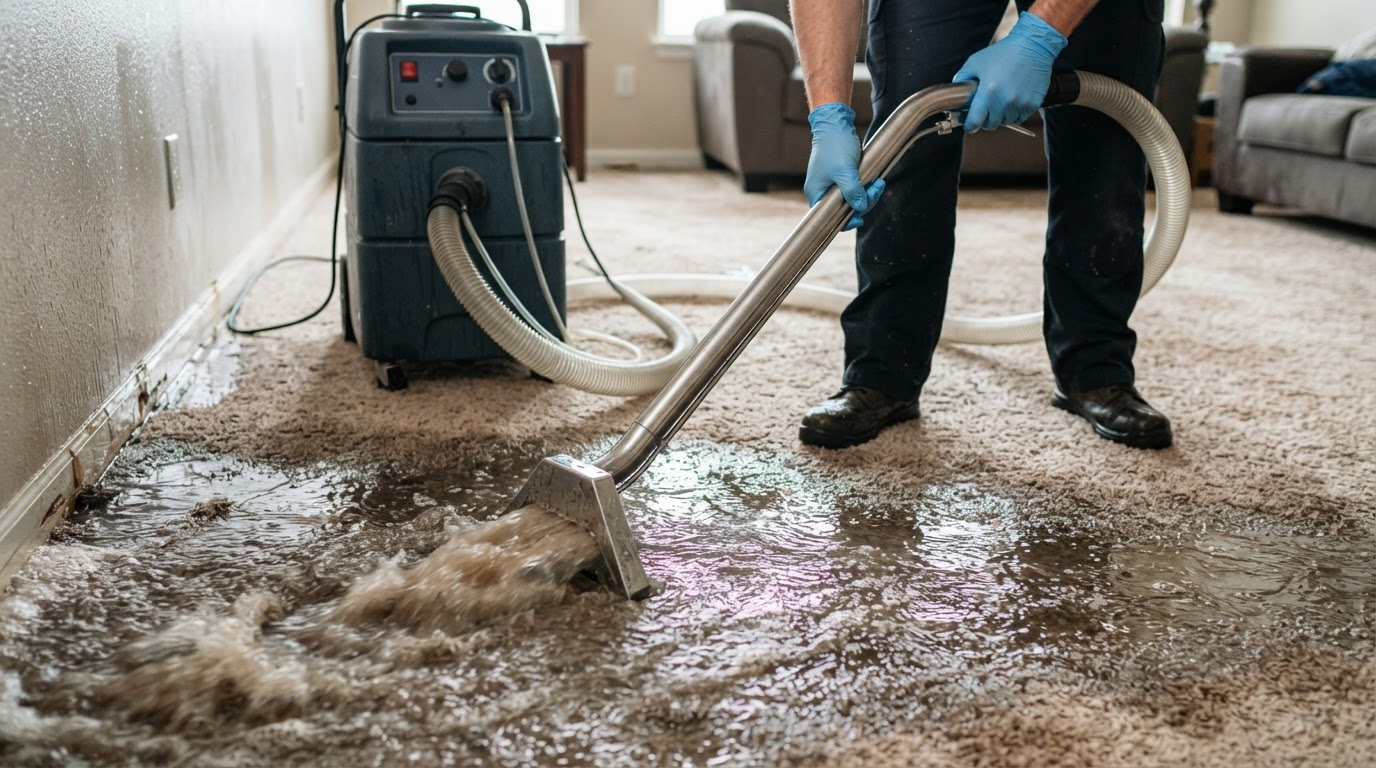
Truck-mounted extractors and submersible pumps remove standing water from floors, while weighted extractors press water out of carpet and padding.
3. Saturated Material Removal
Wet drywall, water-logged insulation, and delaminated materials that cannot be dried are removed to expose framing and subflooring for treatment.
4. Structural Drying
High-velocity air movers and low-grain refrigerant dehumidifiers are positioned to dry framing, subflooring, and remaining structural materials to appropriate moisture levels.
5. Moisture Monitoring
Moisture meters and thermal imaging track drying progress over time, confirming that hidden moisture in wall cavities and beneath flooring has been addressed.
6. Soot Coordination
Where soot and water affect the same materials, fire residue cleaning is coordinated with drying to ensure both contamination and moisture are fully addressed.
7. Restoration Planning
Once the structure is dry and soot is removed, we document affected materials and provide a restoration plan for reinstalling drywall, insulation, and flooring.
Coordinating Fire & Water Restoration
Firefighting water damage requires coordination with soot and smoke cleanup. When water saturates soot-contaminated materials, it dissolves oily residue and spreads it deeper into porous surfaces. Simply drying the materials without removing soot traps contamination beneath the surface, while cleaning soot without addressing trapped moisture allows secondary damage to continue.
The sequence matters. Standing water must be extracted first to halt ongoing moisture migration. Saturated, non-restorable materials are then removed to expose the structure. Structural drying proceeds alongside soot cleaning, with both processes addressing the same affected areas. Moisture monitoring confirms that hidden water in wall cavities and beneath flooring has been fully resolved.
This coordinated approach prevents the common problem of incomplete restoration. Properties treated only for fire damage may develop hidden moisture problems, while those treated only for water damage retain soot and odor. Addressing both together ensures the property is fully restored to a safe, dry, and clean condition.
Request water removal assistance for your New Braunfels property.
Frequently Asked Questions About Firefighting Water Damage
Review common questions about water extraction, structural drying, and coordinated fire and water restoration.
Why is there water damage after a fire?
Water damage occurs because the large volumes of water used during fire suppression saturate drywall, flooring, insulation, and framing. This moisture pools on floors, seeps into wall cavities, and migrates beneath flooring, requiring extraction and structural drying to prevent secondary damage.
How is firefighting water removed?
Standing water is removed using truck-mounted extractors and submersible pumps. Weighted subfloor extractors press water out of carpet and padding. Saturated materials that cannot be dried, such as wet insulation, are removed to expose the structure for drying.
Can firefighting water soak drywall?
Yes. Drywall is highly porous and absorbs water rapidly, losing structural integrity. Saturated drywall may sag or collapse, particularly ceiling drywall exposed to water from above, and often requires removal.
Can water reach the subfloor after fire suppression?
Yes. Water seeps beneath carpet, hardwood, and laminate into the subfloor. Saturated subflooring must be dried using air movers and dehumidifiers and evaluated for structural integrity after prolonged moisture exposure.
Does a property need structural drying after firefighting?
Yes. After standing water is extracted, structural drying with air movers and dehumidifiers is necessary to remove moisture from framing, subflooring, and remaining materials. Moisture monitoring confirms hidden water in cavities has been addressed.
Can smoke and water affect the same materials?
Yes. Firefighting water dissolves oily soot, spreading contamination deeper into porous materials. Fire residue cleaning and structural drying must be coordinated so both contamination and moisture are fully addressed.
What happens first: fire cleanup or water removal?
Water extraction typically begins first to halt ongoing moisture migration, followed by removal of saturated materials. Soot cleaning and structural drying then proceed together, with both processes addressing the same affected areas.
Can firefighting water cause ceiling damage?
Yes. Water from upper-floor suppression saturates ceiling drywall from above, causing it to sag, stain, and potentially collapse. Affected ceiling sections must be evaluated and often removed to allow the cavity above to dry.
Need Water Cleanup After Firefighting in New Braunfels?
Contact New Braunfels Water Damage Restoration at 830-356-3743 to check current service availability for firefighting water extraction and structural drying.
New Braunfels Water Damage Restoration
830-356-3743