
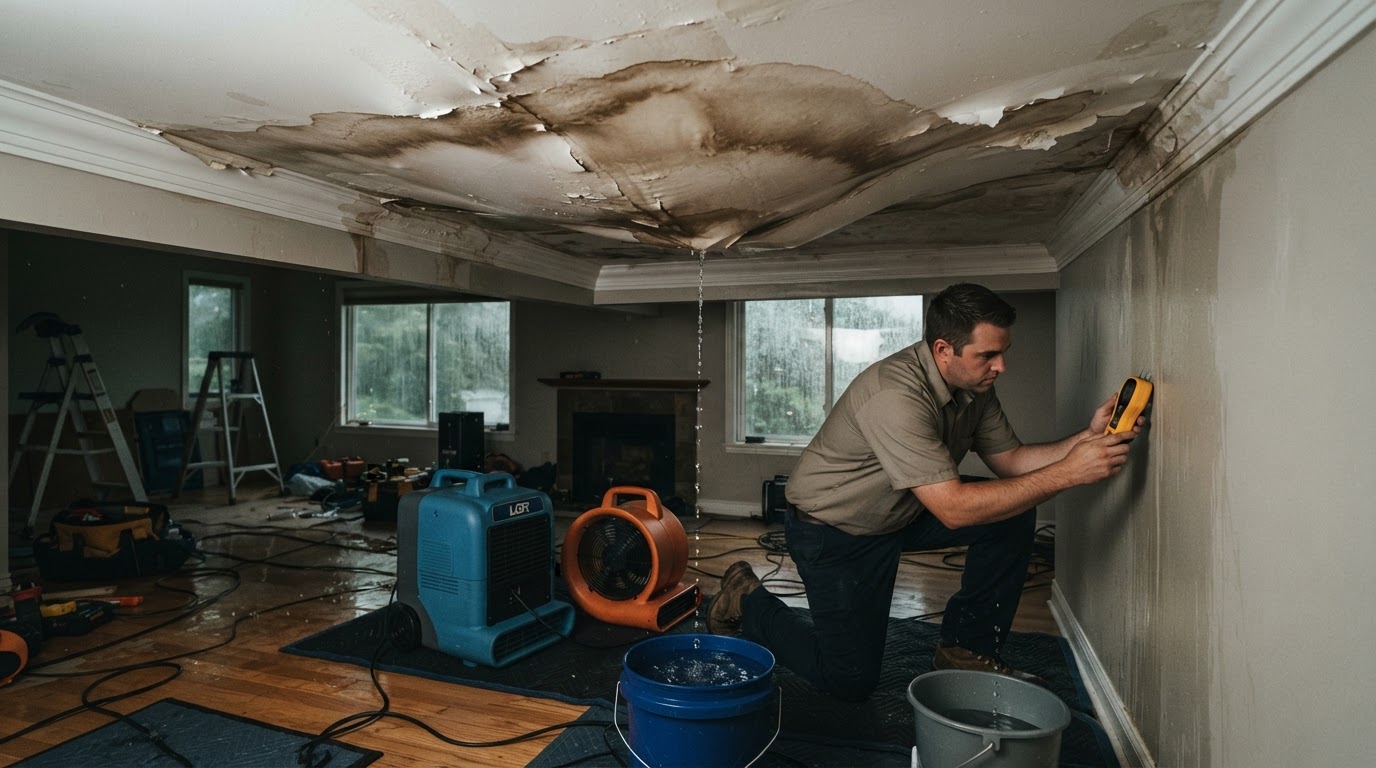
Smoke Damage Cleanup in New Braunfels, TX
Smoke spreads far beyond the immediate flame area, depositing microscopic carbon film, acidic tars, and pungent odor molecules on walls, ceilings, cabinets, and furnishings. Our New Braunfels smoke damage cleanup team provides specialized surface washing, HEPA filtration, and deep smoke deodorization across residential and commercial properties.
Smoke damage cleanup involves mapping smoke migration pathways, removing surface soot deposits with dry chemical sponges and specialized cleaning solutions, treating air ductwork, and neutralizing odor molecules trapped inside porous building materials. Professional cleanup removes corrosive residues before they etch glass, metal fixtures, and painted drywall.
How Smoke Spreads and Behaves Inside Buildings
During a fire, rising temperatures create convection currents that pressurize smoke gases, forcing them through wall penetrations, ceiling light fixtures, door frames, and central HVAC duct systems. Smoke travels toward cooler surfaces, depositing heavy film layers on exterior walls, window panes, and upper ceiling corners.
Different fuels produce distinct types of smoke residue. Dry smoke from fast-burning wood or paper leaves powdery soot, while wet smoke from smoldering synthetic materials creates sticky, pungent tar residues that cling tenaciously to surfaces. Protein smoke from kitchen fires leaves nearly invisible grease films with intense odors.
Over time, smoke residues penetrate deeply into porous materials like drywall, plaster, acoustic ceiling tiles, and carpet fibers. Attempting to wash smoke-stained surfaces with standard household liquids often dissolves oil-soluble tars, smearing them deeper into paint pores.
Can smoke damage spread to rooms untouched by flames?
Yes. Smoke behaves like a pressurized gas, traveling freely through open doorways, hallway chases, wall cavities, and operating HVAC ductwork. It deposits soot film and persistent odor in rooms hundreds of feet away from the origin of the fire.
Call now to check immediate availability for smoke damage cleanup in new braunfels, tx.
Call 830-356-3743Surfaces and Materials Compromised by Smoke Residue
Smoke residue affects virtually every surface inside a building. Our technicians inspect materials across your New Braunfels property to determine whether specialized dry cleaning, wet washing, or material replacement is required.
Painted Drywall & Plaster Walls
Smoke leaves yellowed, streaked stains across wall surfaces. Dry rubber sponges remove loose carbon before mild alkaline detergent washes lift embedded smoke tars without stripping paint.
Ceilings & Crown Molding
Rising smoke deposits dense soot along upper wall perimeters and ceiling planes. HEPA vacuuming and chemical sponge treatments prevent soot from raining down during subsequent restoration.
Kitchen & Bathroom Cabinets
Varnished wood and laminate cabinets absorb smoke odors and trap sticky film. Interior shelving, drawer slides, and cabinet backs are thoroughly cleaned and deodorized.
Window Glass, Frames & Metal Trim
Acidic smoke compounds chemically etch window glass and tarnish metal hardware if left uncleaned. Early glass polishing and metal neutralizers restore clarity and finish.
HVAC Registers & Internal Ductwork
Supply and return vents collect heavy smoke film. Duct systems are mechanically brushed, vacuumed under negative pressure, and fogged with antimicrobial deodorizers.
Upholstered Furniture & Soft Goods
Fabrics act as air filters during a smoke event. Deep HEPA vacuuming, solvent cleaning, and ozone or hydroxyl chamber processing restore salvageable upholstered items.
Understanding the chemical composition of smoke allows our New Braunfels specialists to match the precise solvent or dry sponge technology to each affected surface.
Our Comprehensive Smoke Damage Cleanup Workflow
We utilize proven techniques to eliminate smoke residue, neutralize odors, and restore healthy indoor air quality.
1. Smoke Migration & Fuel Type Inspection
We assess the scope of smoke penetration and determine whether residues stem from dry wood, smoldering synthetics, or kitchen grease.
2. Air Filtration Unit (AFU) Deployment
High-capacity HEPA air scrubbers with activated carbon filters are installed to capture airborne soot particles and reduce circulating odors.
3. HEPA Vacuuming & Dry Chemical Sponge Cleaning
Loose soot is vacuumed with sealed HEPA equipment. Dry vulcanized rubber sponges lift carbon particles without water or liquid cleaners.
4. Specialized Wet Surface Washing
Wall and ceiling surfaces are hand-washed using chemical solutions formulated to break down oily smoke tars and neutralizer rinses.
5. HVAC Vent & Duct Deodorization
Ductwork is cleaned and treated to prevent central air systems from recontaminating cleaned living spaces.
6. Thermal Fogging & Hydroxyl Treatment
Odor-neutralizing fogs mimic smoke movement, reaching deep into structural cavities to bind and destroy odor molecules.
Why Professional Deodorization Is Essential
Simply covering up smoke smells with perfumed sprays or air fresheners fails because odor-causing volatile organic compounds remain trapped inside dry wallboard and structural framing.
Professional smoke cleanup combines physical residue removal with molecular neutralization. By utilizing HEPA air scrubbing, thermal fogging, and specialized sealant primers, our New Braunfels technicians ensure smoke odors do not recur during humid Texas weather.
Request water removal assistance for your New Braunfels property.
Frequently Asked Questions About Smoke Damage Cleanup in New Braunfels
Find answers to common questions about cleaning smoke-stained walls, ceilings, cabinets, and air systems.
What is the difference between smoke damage and soot damage?
Smoke damage includes the overall contamination caused by hot combustion gases, oils, tars, and lingering odors, whereas soot damage refers specifically to the fine black carbon particulate matter deposited on surfaces.
Can smoke-stained drywall be cleaned or must it be replaced?
Drywall stained by smoke can often be restored if the gypsum core remains dry and structurally sound. Technicians vacuum loose soot, clean surfaces with chemical sponges and specialized washes, and seal the wall with odor-blocking primer before repainting.
How do you remove smoke odor from a house?
Smoke odor is removed by physically cleaning all soot-covered surfaces, HEPA vacuuming, treating air ductwork, fogging with odor-neutralizing compounds that penetrate materials like smoke did, and sealing structural wood framing.
Why does smoke odor get worse on hot humid days?
Increased temperature and humidity cause porous building materials like drywall and framing lumber to expand and off-gas trapped volatile smoke molecules. Professional deodorization neutralizes these compounds inside the material pores.
Can window glass be permanently damaged by smoke?
Yes. Smoke contains acidic chemical compounds. If left on glass panes for extended periods, heat and acid can cause irreversible etching and clouding. Early cleaning preserves window clarity.
How are HVAC air ducts cleaned after a smoke event?
Air ducts are mechanically scrubbed and vacuumed under high negative pressure to extract soot deposits, followed by fogging with hospital-grade antimicrobial and deodorizing agents.
Should I run my air conditioner after a smoke incident?
No. Running your HVAC unit before ducts and filters are cleaned draws loose soot into the blower motor and redistributes smoke particles into clean rooms throughout the building.
Can kitchen cabinet interiors be cleaned of smoke?
Yes. Cabinet drawers, shelves, and interior backs are emptied, dry-sponged to remove loose carbon, washed with neutralizer solutions, and treated to eliminate trapped food and smoke smells.
Need Smoke Damage Cleanup in New Braunfels, TX?
Call New Braunfels Water Damage Restoration at 830-356-3743 to check immediate availability for professional smoke cleaning, soot removal, and air deodorization.
New Braunfels Water Damage Restoration
830-356-3743