
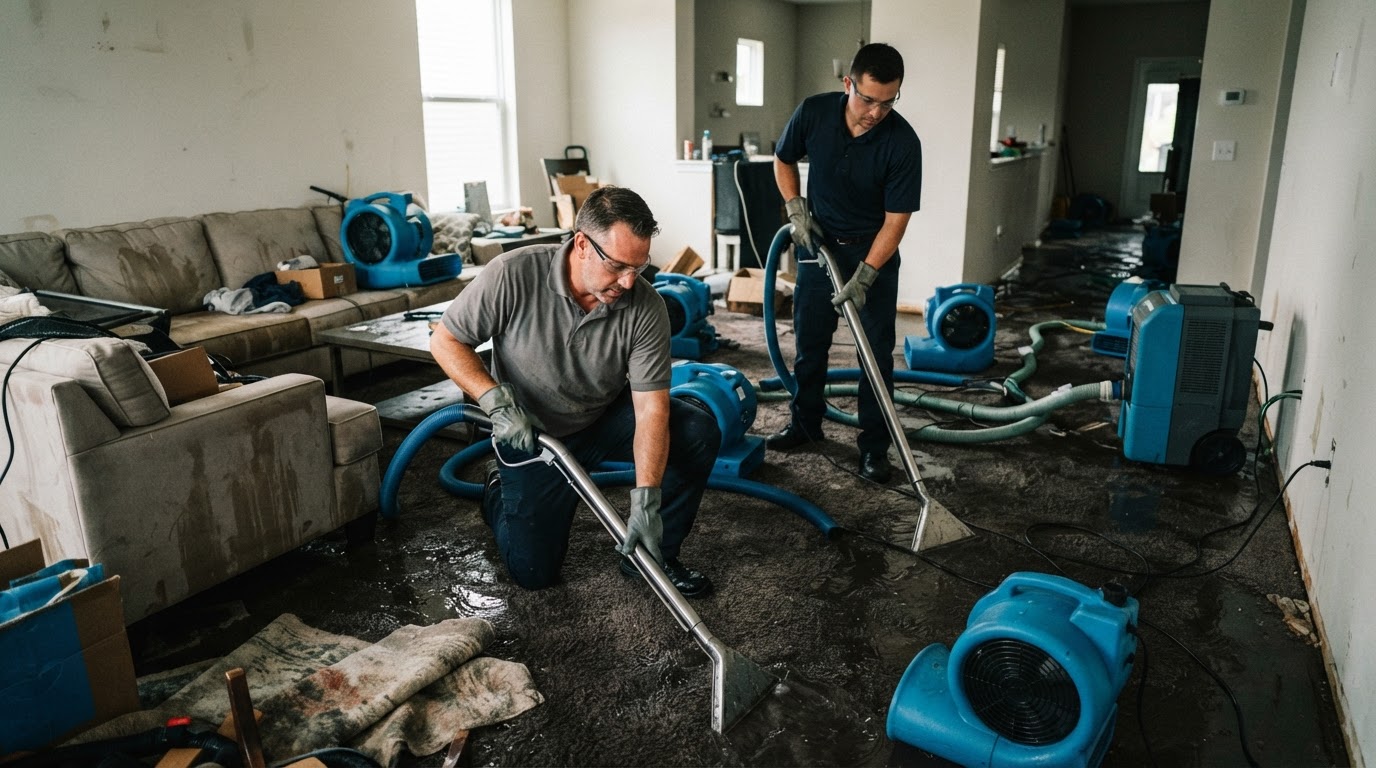
Fire Damage Restoration in New Braunfels, TX
When fire strikes a home or business in New Braunfels, the damage extends far beyond charred wood. Heavy smoke, greasy soot deposits, toxic combustion odors, and thousands of gallons of firefighting water combine to compromise property integrity. Our local restoration team provides comprehensive fire damage cleanup, soot removal, smoke deodorization, and structural stabilization across New Braunfels and Central Texas.
Fire damage restoration is the multi-stage process of stabilizing a fire-impacted structure, removing charred debris, extracting firefighting water, eliminating soot and smoke residues from structural surfaces, and neutralizing heavy smoke odors. Prompt professional restoration prevents corrosive soot from permanently etching metals, glass, and synthetic building materials.
Understanding the Extent of Fire, Smoke, and Soot Damage
A property fire creates complex chemical and physical damage patterns throughout a building. While thermal radiation charrs materials near the ignition point, superheated air carries toxic smoke gases and fine carbon soot particles through hallways, attic chases, wall cavities, and HVAC ductwork to unburned rooms.
Within minutes of fire suppression, synthetic soot residues settle on cool surfaces, forming acidic corrosive films. If left untreated, these residues bond with finishes, pitting stainless steel appliances, yellowing painted drywall, etching glass fixtures, and discoloring synthetic counter surfaces throughout your New Braunfels property.
Furthermore, water used by emergency responders to extinguish flames creates secondary moisture problems. Saturated ceiling joists, wet insulation, and standing water on subflooring require immediate high-volume extraction and industrial dehumidification alongside fire mitigation to prevent structural decay.
What should I do after a property fire in New Braunfels?
First, ensure local fire authorities have officially cleared the building for safe entry. Avoid walking through fire-damaged rooms or turning on electrical switches until utilities have been inspected. Keep occupants away from heavy soot and smoke deposits, refrain from wiping soot-covered walls yourself as unguided cleaning smears oily residues deeper into drywall pores, and call our New Braunfels fire damage restoration crew to begin debris evaluation, moisture extraction, and soot removal.
Call now to check immediate availability for fire damage restoration in new braunfels, tx.
Call 830-356-3743Affected Building Assemblies and Fire Residue Categories
Combustion releases different forms of smoke and soot depending on fuel sources, air volume, and temperature. Our technicians evaluate affected materials across your New Braunfels property to apply targeted cleaning formulations.
Charred Framing & Structural Timbers
Heavy thermal exposure chars structural studs, rafters, and floor joists. Compromised lumber is evaluated for load capacity, scraped or media-blasted to remove charred layers, and sealed with odor-encapsulating sealants.
Drywall, Plaster & Wall Cavities
Smoke migrates behind trim and electrical outlet boxes into wall cavities. Wet or charred gypsum is removed, while soot-stained drywall is vacuumed with HEPA equipment and cleaned with dry chemical sponges.
Cabinets, Millwork & Trim
Kitchen and bathroom cabinetry absorbs heat and smoke. Varnish coatings soft from heat trap soot particles. Specialized solvent washes and micro-abrasive techniques lift deposits without destroying original wood finishes.
Roof Assemblies & Attic Cavities
Rising heat carries dense smoke into attics, coating roof trusses and blown insulation. Contaminated insulation is vacuumed out, and rafter lumber is scrubbed and sealed against lingering smoke odors.
Flooring, Carpet & Subfloor Assemblies
Soot settles heavily on carpet fibers, tile grout, and hardwood seams. Combined with firefighting water, flooring assemblies require deep weighted extraction, HEPA vacuuming, and specialized subfloor drying.
HVAC Systems & Air Ductwork
Operating HVAC systems pull heavy smoke through return vents, distributing soot and odor compounds throughout unaffected rooms. Duct systems require thorough mechanical cleaning and antimicrobial treatment.
Our New Braunfels fire restoration specialists evaluate fuel types—wet wood smoke, dry synthetic soot, or greasy protein residue—to select non-corrosive cleaning agents that protect structural integrity.
Our Step-by-Step Fire Damage Restoration Process
We follow a rigorous, industry-standard mitigation workflow to restore fire-impacted properties safely and systematically.
1. Safety & Structural Inspection
We conduct a thorough site assessment once fire officials release the property, evaluating framing stability, electrical hazard risks, overhead ceiling integrity, and moisture levels.
2. Emergency Tarping & Enclosure Stabilization
Open roof penetrations or broken windows are secured to protect the interior from weather intrusion and secure the structure during restoration.
3. Firefighting Water Extraction & Drying
Truck-mounted extractors remove standing water left by fire hoses. LGR dehumidification units and air movers dry structural framing, concrete slabs, and subfloors.
4. Debris Removal & Unsalvageable Material Removal
Heavily charred, non-restorable materials such as destroyed drywall, ruined carpet, and collapsed ceiling tiles are carefully removed and cataloged for property owner records.
5. HEPA Vacuuming & Soot Removal
Industrial HEPA vacuum units capture loose carbon soot from walls, ceilings, and joists. Dry chemical sponges and specialized alkaline washes lift sticky soot films.
6. Thermal Fogging & Smoke Odor Deodorization
Advanced thermal foggers and hydroxyl generators penetrate porous building materials to neutralize odor-causing volatile organic compounds at the molecular level.
7. Encapsulation & Surface Priming
Exposed stud framing and rafter assemblies are coated with specialized odor-barrier sealants to lock in microscopic residue before reconstruction begins.
Addressing Smoke Migration & Secondary Water Damage
Fire damage is rarely isolated to the room of origin. High temperatures create pressure differentials that force smoke into adjacent rooms, inside hollow interior doors, through electrical conduit, and up into roof trusses.
Additionally, water sprayed during suppression saturates building materials beneath soot deposits. If water extraction is delayed, damp organic materials under soot layers suffer rapid deterioration. Combining fire residue removal with structural drying protects your New Braunfels building from secondary moisture decay.
Request water removal assistance for your New Braunfels property.
Frequently Asked Questions About Fire Damage Restoration in New Braunfels
Get clear, expert answers regarding fire cleanup, soot removal, smoke deodorization, and structural restoration.
What does fire damage restoration include?
Fire damage restoration includes safety evaluations, firefighting water extraction, structural drying, removal of unsalvageable charred materials, HEPA vacuuming of soot, chemical cleaning of walls and ceilings, thermal fogging for smoke odor removal, and seal-coating framing prior to rebuilding.
Can smoke damage affect rooms that were not burned?
Yes. Superheated air currents drive smoke particles through doorways, attic spaces, wall chases, and HVAC ductwork, leaving heavy soot deposits and persistent smoke odor in rooms untouched by flames.
How is soot cleaned off walls and ceilings?
Soot is removed using specialized HEPA-filtered vacuum systems followed by dry chemical rubber sponges that attract carbon particles without smearing. Oily or synthetic soot is then cleaned with targeted alkaline washing solutions.
Why shouldn't I clean fire damage myself?
Standard household cleaners and wet sponges can dissolve oily soot particles, forcing them deeper into porous drywall and wood grain. Improper wiping permanently stains surfaces and traps smoke odors.
Does firefighting water cause additional structural issues?
Yes. Thousands of gallons of water used during suppression saturate subfloors, insulation, and ceiling assemblies. Immediate water extraction and industrial dehumidification are required to prevent structural warping and wood decay.
How is smoke odor permanently removed?
Smoke odor is eliminated by removing soot source residues, HEPA vacuuming, thermal fogging with odor-neutralizing agents, hydroxyl generation, and applying specialized odor-sealant primers to structural framing.
Can fire-damaged building materials be restored?
Framing lumber with surface charring can often be scraped, media-blasted, and sealed if structural integrity remains intact. Highly distorted, burned, or compromised materials must be safely removed and replaced.
How quickly should fire restoration begin after clearance?
Restoration should begin as soon as fire officials clear the site. Acidic soot residues begin etching metal fixtures, glass, and countertops within hours, making rapid intervention vital to minimizing permanent loss.
Need Fire Damage Restoration in New Braunfels, TX?
Contact New Braunfels Water Damage Restoration at 830-356-3743 to check current service availability for fire cleanup, soot removal, smoke deodorization, and structural drying.
New Braunfels Water Damage Restoration
830-356-3743