Fire Sprinkler Water Damage Cleanup in New Braunfels
When a fire sprinkler system activates, it releases large volumes of water that can saturate flooring, ceilings, walls, and contents across multiple rooms or commercial units. Even without significant fire damage, sprinkler discharge creates substantial water damage that requires prompt extraction and structural drying. Our New Braunfels restoration team provides fire sprinkler water damage cleanup for residential and commercial properties.
Fire sprinkler water damage cleanup is the process of extracting water released by an activated sprinkler system, drying saturated flooring, ceilings, walls, and contents, and restoring affected materials. Once the fire or sprinkler situation is safe and appropriately addressed, standing water and moisture within affected materials require extraction and drying to prevent secondary damage.
How Sprinkler Discharge Causes Water Damage
Fire sprinkler systems are designed to deliver large volumes of water quickly to suppress a fire. A single activated sprinkler head can release 15 to 30 gallons per minute, and multiple heads may activate depending on the fire's location and heat spread. This water accumulates rapidly on floors, saturates ceiling materials beneath the discharge point, and migrates into wall cavities and beneath flooring.
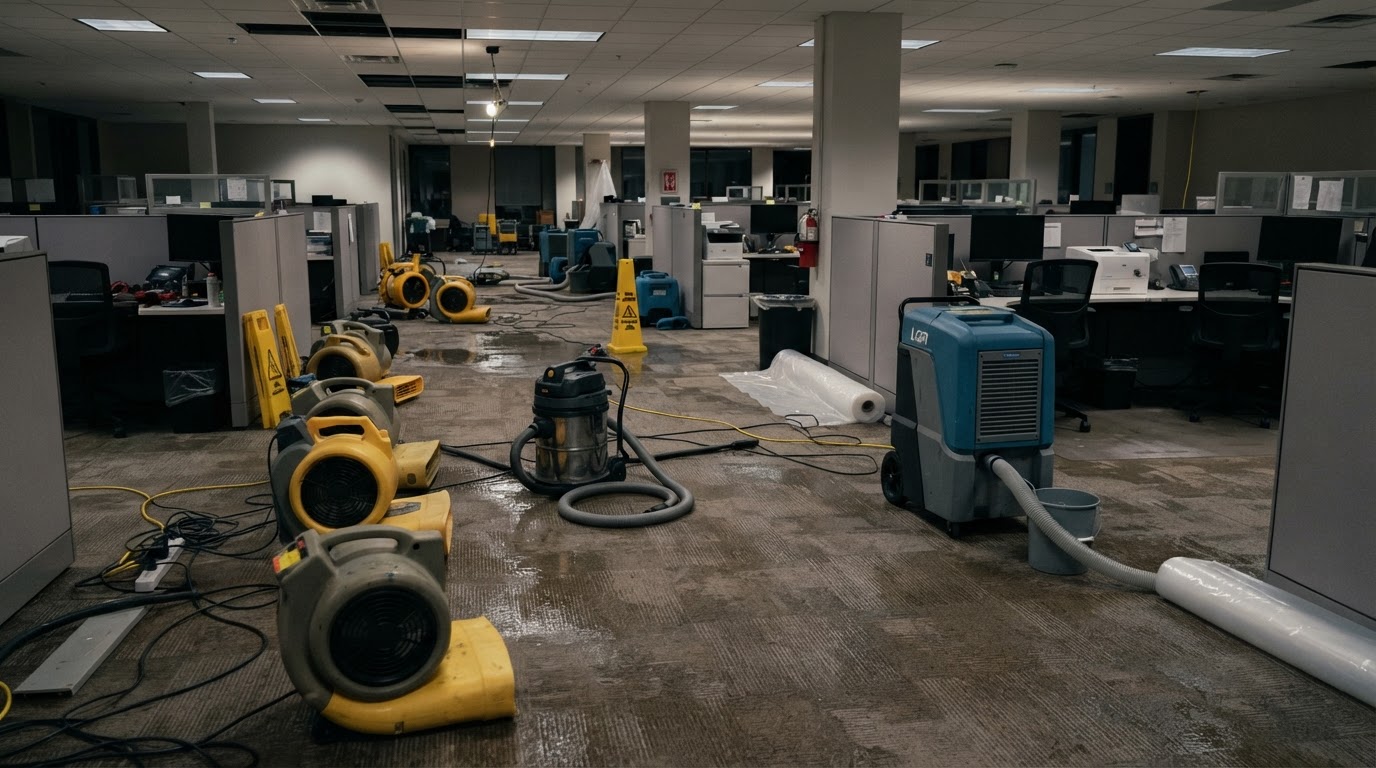
In commercial properties, sprinkler discharge can affect large floor areas, multiple rooms, and even multiple floors as water flows through penetrations and along pathways. Retail inventory, office equipment, ceiling tiles, and commercial flooring all absorb water. In multifamily properties, water from an upper-floor activation can damage ceilings and walls in units below.
Sprinkler activation does not always indicate a major fire. Systems can discharge due to accidental activation, system malfunction, freezing damage to pipes, or a small, quickly controlled fire. Regardless of the cause, the water damage requires the same prompt extraction and drying response to prevent secondary damage to building materials.
What should happen after a fire sprinkler system releases water?
Once the fire or sprinkler situation is safe and appropriately addressed, standing water should be extracted promptly and affected materials evaluated for moisture. Sprinkler discharge can saturate flooring, ceilings, walls, and contents across multiple areas, making water extraction and structural drying necessary to prevent secondary damage. The sprinkler system itself should be evaluated and repaired by the appropriate qualified professional before reuse.
Call now to check immediate availability for fire sprinkler water damage cleanup in new braunfels.
Call 830-356-3743Materials Affected by Sprinkler Water
We evaluate each material affected by sprinkler discharge to determine the appropriate extraction and drying approach.
Commercial Flooring
Sprinkler water saturates carpet, vinyl, and tile flooring across large areas. Water seeps into subflooring and beneath floor coverings, requiring deep extraction and subfloor drying.
Ceiling Tiles & Drywall
Ceiling materials directly beneath discharge points absorb water rapidly. Suspended ceiling tiles sag and may collapse; drywall loses integrity and often requires removal.
Walls & Wall Cavities
Water migrates into wall cavities through baseboards and electrical penetrations. Wet insulation and drywall within cavities must be addressed to prevent hidden moisture damage.
Commercial Contents
Retail inventory, office equipment, documents, and furnishings absorb water. Contents require evaluation for salvageability and specialized drying or cleaning.
Multiple Rooms & Units
Water flows through doorways and floor penetrations into adjacent rooms and lower levels. In multifamily properties, upper-floor discharge damages ceilings and walls below.
Subflooring & Framing
Water that reaches the subfloor saturates plywood or concrete. Wood framing exposed to prolonged moisture must be dried and evaluated for structural integrity.
We do not claim to repair fire sprinkler systems. The sprinkler system itself should be evaluated and repaired by the appropriate qualified fire protection professional before being returned to service. Our services address the resulting water damage to building materials and contents.
Fire Sprinkler Water Cleanup Process
We follow a systematic process to extract sprinkler water and dry affected materials in New Braunfels properties.
1. Safety & Water Assessment
Once the sprinkler situation is safe, we assess standing water, saturated materials, and the full extent of moisture migration using moisture meters and thermal imaging.
2. Standing Water Extraction
Truck-mounted extractors and submersible pumps remove standing water from floors. Weighted extractors press water out of carpet and padding in commercial and residential spaces.
3. Saturated Material Removal
Wet ceiling tiles, saturated drywall, and water-logged insulation that cannot be dried are removed to expose framing and subflooring for treatment.
4. Contents Evaluation
Affected inventory, equipment, and furnishings are evaluated for salvageability. Restorable contents are separated for specialized drying and cleaning.
5. Structural Drying
Air movers and dehumidifiers are positioned to dry flooring, subflooring, walls, and framing. Equipment placement targets the full extent of moisture migration.
6. Moisture Monitoring
Moisture meters track drying progress over time, confirming that hidden moisture in wall cavities, beneath flooring, and in ceiling assemblies has been fully addressed.
7. Restoration Planning
We document affected materials and provide a restoration plan for replacing ceiling tiles, drywall, insulation, and flooring to restore the property.
Commercial Considerations & Multi-Area Damage
Sprinkler discharge in commercial properties often affects large areas and multiple rooms. Water flows freely across commercial floors, through doorways, and into adjacent suites. In multi-tenant buildings, water from one unit's activation can damage neighboring units and common areas, requiring coordinated restoration across property boundaries.
Commercial ceiling systems present specific challenges. Suspended acoustic ceiling tiles absorb water rapidly, sag, and can collapse under the weight. These tiles typically cannot be dried and must be replaced. The grid systems above may also require cleaning and evaluation. Drywall ceilings beneath upper-floor activations face similar saturation and collapse risks.
Business interruption is a significant concern. Standing water and wet materials can halt operations, damage inventory, and force temporary closure. Prompt extraction and drying, combined with phased restoration that allows unaffected areas to remain operational where possible, helps minimize downtime. Coordinating with property managers and tenants supports an efficient recovery.
Request water removal assistance for your New Braunfels property.
Frequently Asked Questions About Fire Sprinkler Water Damage
Review common questions about sprinkler discharge, water extraction, and commercial property drying.
Can fire sprinklers cause significant water damage?
Yes. A single activated sprinkler head can release 15 to 30 gallons per minute. Multiple heads may activate, saturating flooring, ceilings, walls, and contents across large areas. Even without major fire damage, sprinkler discharge creates substantial water damage requiring prompt extraction.
How is sprinkler water removed from flooring?
Standing water is extracted using truck-mounted extractors and submersible pumps. Weighted subfloor extractors press water out of carpet and padding. Water that has seeped beneath flooring into the subfloor requires targeted air mover and dehumidifier drying.
Can sprinkler water soak ceiling tiles and drywall?
Yes. Ceiling materials directly beneath discharge points absorb water rapidly. Suspended acoustic tiles sag and often collapse; drywall loses structural integrity. These materials typically cannot be dried and require removal and replacement.
Does commercial property need structural drying after sprinkler discharge?
Yes. After standing water is extracted, structural drying with air movers and dehumidifiers is necessary to remove moisture from flooring, subflooring, walls, and framing. Moisture monitoring confirms hidden water has been fully addressed.
Can sprinkler water reach multiple rooms?
Yes. Water flows through doorways, floor penetrations, and along pathways into adjacent rooms and lower levels. In multi-tenant buildings, discharge from one unit can damage neighboring units and common areas.
Who repairs the sprinkler system?
The fire sprinkler system should be evaluated and repaired by the appropriate qualified fire protection professional before being returned to service. Our restoration services address the resulting water damage to building materials and contents, not the sprinkler system itself.
Is sprinkler water cleanup different from smoke cleanup?
They address different damage types but may be needed together. Sprinkler cleanup focuses on water extraction and drying, while smoke cleanup addresses soot and odor. When both occur, the processes are coordinated to address moisture and contamination simultaneously.
Can sprinkler discharge happen without a major fire?
Yes. Systems can activate due to accidental discharge, malfunction, freezing damage to pipes, or a small, quickly controlled fire. Regardless of the cause, the resulting water damage requires the same prompt extraction and drying response.
Need Sprinkler Water Cleanup in New Braunfels?
Contact New Braunfels Water Damage Restoration at 830-356-3743 to check current service availability for fire sprinkler water damage cleanup.
New Braunfels Water Damage Restoration
830-356-3743