
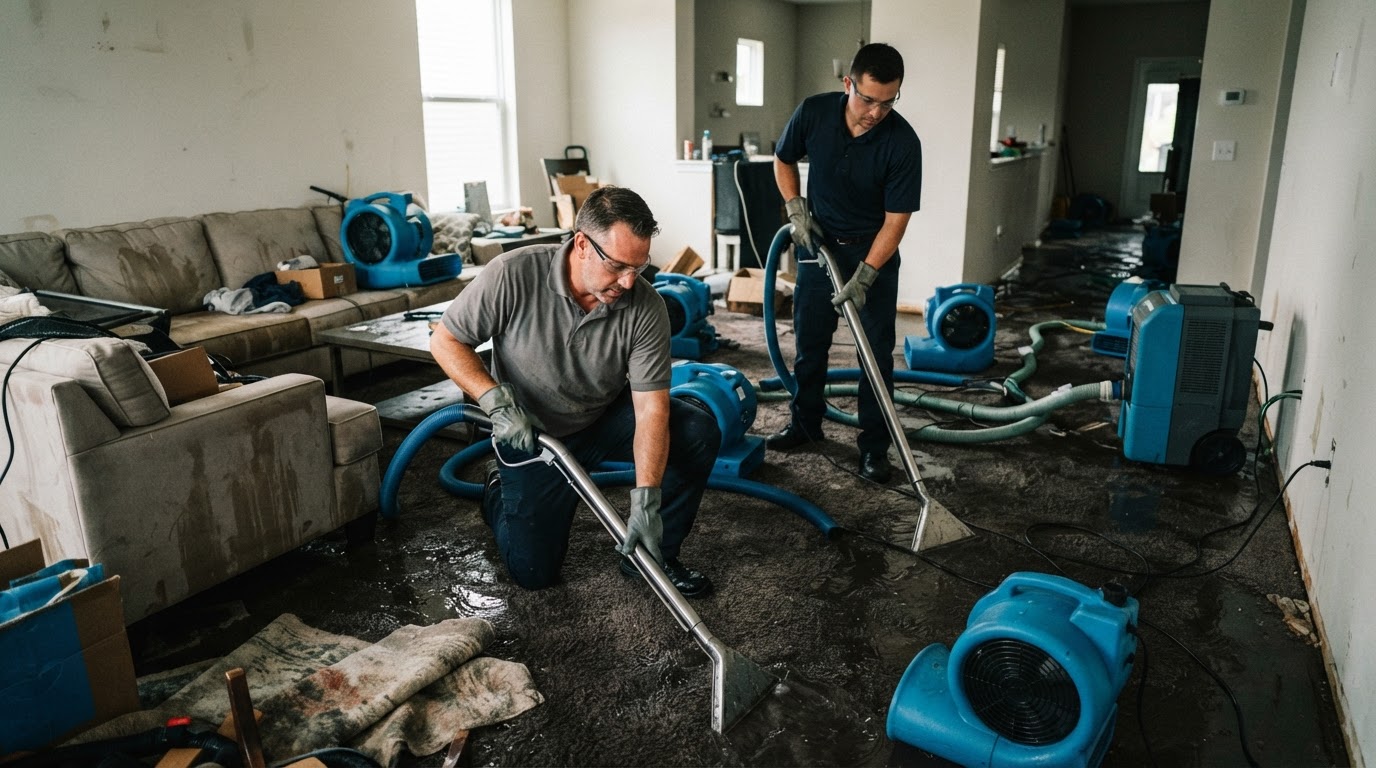
Soot Damage Cleanup in New Braunfels, TX
Soot is a dark, powdery or greasy byproduct of incomplete combustion that coats walls, ceilings, light fixtures, and furniture following a fire or furnace puffback. Our New Braunfels soot damage cleanup technicians utilize dry vulcanized sponges, HEPA extraction, and specialized degreasing solutions to safely remove carbon deposits without smearing or permanently staining surfaces.
Soot damage cleanup is the process of extracting fine carbon particulate residue from indoor building assemblies and contents. Because soot contains acidic compounds and sticky fuel oils, improper cleaning smears the residue deeper into porous paint and drywall. Professional cleanup uses HEPA vacuuming, dry chemical sponges, and targeted alkaline washes to lift soot completely.
The Physical and Chemical Characteristics of Soot
Soot particles are microscopic carbon clusters formed when organic fuels—such as wood, natural gas, synthetic plastics, or oil—burn incompletely. Because soot particles range from 2.5 microns down to sub-micron sizes, they drift easily through indoor air currents, settling into fine cracks, textured ceilings, and fabric weaves.
Chemically, soot contains acidic sulfur and nitrogen compounds mixed with unburned fuel oils. When moisture or high indoor humidity combines with soot deposits, acidic reactions accelerate, causing yellowing on white appliance finishes, pitting on chrome or brass fixtures, and permanent staining on painted walls.
A common mistake made during DIY cleanup is applying wet rag wiping to dry soot. Liquid solvents cause carbon particles to dissolve and bleed deep into paint pores, turning a localized soot layer into a permanent dark smudge. Professional dry-sponge extraction must precede any liquid washing.
What is the correct way to clean soot off walls and ceilings?
Soot must first be dry-extracted using high-efficiency HEPA vacuums held slightly above the surface, followed by vulcanized dry rubber sponges that attract carbon particles electrostatically. Only after dry soot is completely removed should specialized chemical alkaline detergents be used for final washing.
Call now to check immediate availability for soot damage cleanup in new braunfels, tx.
Call 830-356-3743Surfaces Highly Susceptible to Soot Accumulation
Soot deposits heavily on electrostatically charged or cooler surfaces throughout your New Braunfels home or business. Our crew inspects and restores all affected structural elements.
Textured & Flat Drywall Ceilings
Rising thermal plumes deposit dark soot webs along ceiling corners and light fixture rims. HEPA vacuuming and chemical rubber sponge wiping lift carbon without damaging acoustic texture.
Painted Walls & Door Casing Trim
Vertical wall planes collect dark soot streaks. Dry sponge absorption followed by neutralizer washing cleans paint layers prior to any necessary repainting.
Window Glass & Mirror Panels
Acidic soot creates cloudy films on glass. Specialized glass neutralizers remove film before chemical pitting or permanent etching occurs.
HVAC Return Grilles & Diffusers
Air registers pull soot-laden air into HVAC ductwork. Grilles are detached, degreased, and disinfected while internal ductwork is mechanically cleaned.
Light Fixtures & Ceiling Fans
Heat and static draw soot to fan blades and glass globes. Fixtures are carefully disassembled, hand-cleaned, and polished.
Blinds, Drapes & Window Coverings
Soot clings to window treatment fabrics and vinyl slats. Ultrasonic blind cleaning and specialized dry-cleaning methods restore window coverings.
Our New Braunfels technicians match specialized dry sponge textures and alkaline cleaning agents to the specific surface coating to prevent finish degradation.
Our Step-by-Step Soot Removal Workflow
We follow an established, non-smearing carbon extraction protocol to lift soot from every affected material.
1. Surface Inspection & Soot Type Testing
We test soot deposits to determine whether they are dry carbon particles, oily synthetic residues, or sticky protein films from cooking.
2. Containment & HEPA Air Scrubbing
Critical doorways are sealed and HEPA air scrubbers are engaged to prevent airborne soot particles from drifting into clean areas during work.
3. Contactless HEPA Vacuuming
Specialized vacuum nozzles hovering just above surfaces draw away loose soot without pressing carbon grains into wall paint.
4. Vulcanized Dry Chemical Sponge Wiping
Natural rubber dry sponges absorb soot particles electrostatically, wiping clean wall and ceiling areas systematically from top to bottom.
5. Targeted Solvent & Alkaline Washing
For oily soot or grease films, specialized detergent washes break down carbon binders, followed by a clean water neutralizing rinse.
6. Odor Encapsulation & Surface Sealing
Where walls or framing require painting, stain-blocking and odor-sealing primers are applied to ensure a pristine finish.
Preventing Permanent Acidic Corrosion
Because soot contains acidic compounds, timing is critical. Within 24 to 48 hours, soot can cause irreversible discoloration on fiberglass tubs, yellowing on marble countertops, and pitting on polished metal hardware.
Prompt soot cleanup by our New Braunfels specialists halts chemical corrosion, preserving valuable fixtures, cabinets, and decorative building elements throughout your property.
Request water removal assistance for your New Braunfels property.
Frequently Asked Questions About Soot Damage Cleanup in New Braunfels
Explore common questions regarding soot removal from drywall, ceilings, glass, and household fixtures.
What happens if you try to wash soot with water and soap?
Washing soot directly with water or household soap dissolves oil-soluble carbon particles, turning dry soot into a dark liquid slurry that penetrates deep into paint and drywall pores, creating permanent smudges.
What is a dry chemical sponge?
A dry chemical sponge is made of vulcanized natural rubber. It works electrostatically without water or liquid cleaners, lifting carbon soot particles out of surface pores without smearing.
Can soot damage metal hardware and appliances?
Yes. Soot contains acidic compounds that react with moisture in the air to pit chrome, brass, and stainless steel finishes. Prompt cleaning halts acidic corrosion.
How do you clean soot off textured popcorn ceilings?
Popcorn ceilings are extremely delicate. Technicians use contactless HEPA vacuuming combined with gentle dry sponge tapping to remove soot without dislodging acoustic ceiling texture.
Is soot dangerous to breathe?
Yes. Soot particles are extremely small and can irritate respiratory passages if inhaled. Professional cleanup utilizes HEPA containment to maintain safe indoor air quality.
Can soot settle inside closed cabinets and drawers?
Yes. Air pressure during a fire forces soot through cabinet seams and drawer slides. Interior cabinet surfaces must be inspected and dry-sponged during mitigation.
What is a soot web?
Soot webs (or cobwebs) form when hot synthetic smoke particles ionize and clump together on cooler ceiling corners. They are composed entirely of soot and require dry vacuum extraction.
How long can soot stay on walls before permanent staining occurs?
Soot can begin staining painted surfaces and etching metal within 24 to 48 hours. Immediate professional intervention is recommended to prevent permanent damage.
Need Soot Damage Cleanup in New Braunfels, TX?
Contact New Braunfels Water Damage Restoration at 830-356-3743 for professional soot removal, chemical sponge extraction, and surface restoration across Central Texas.
New Braunfels Water Damage Restoration
830-356-3743