
Water Softener Leak & Overflow Cleanup in New Braunfels
Water softeners are common in Central Texas homes due to hard water mineral content. Cracked brine tanks, stuck regeneration drain valves, loose bypass valves, and resin tank leaks can release dozens or hundreds of gallons of water into garages, utility closets, and interior living areas.
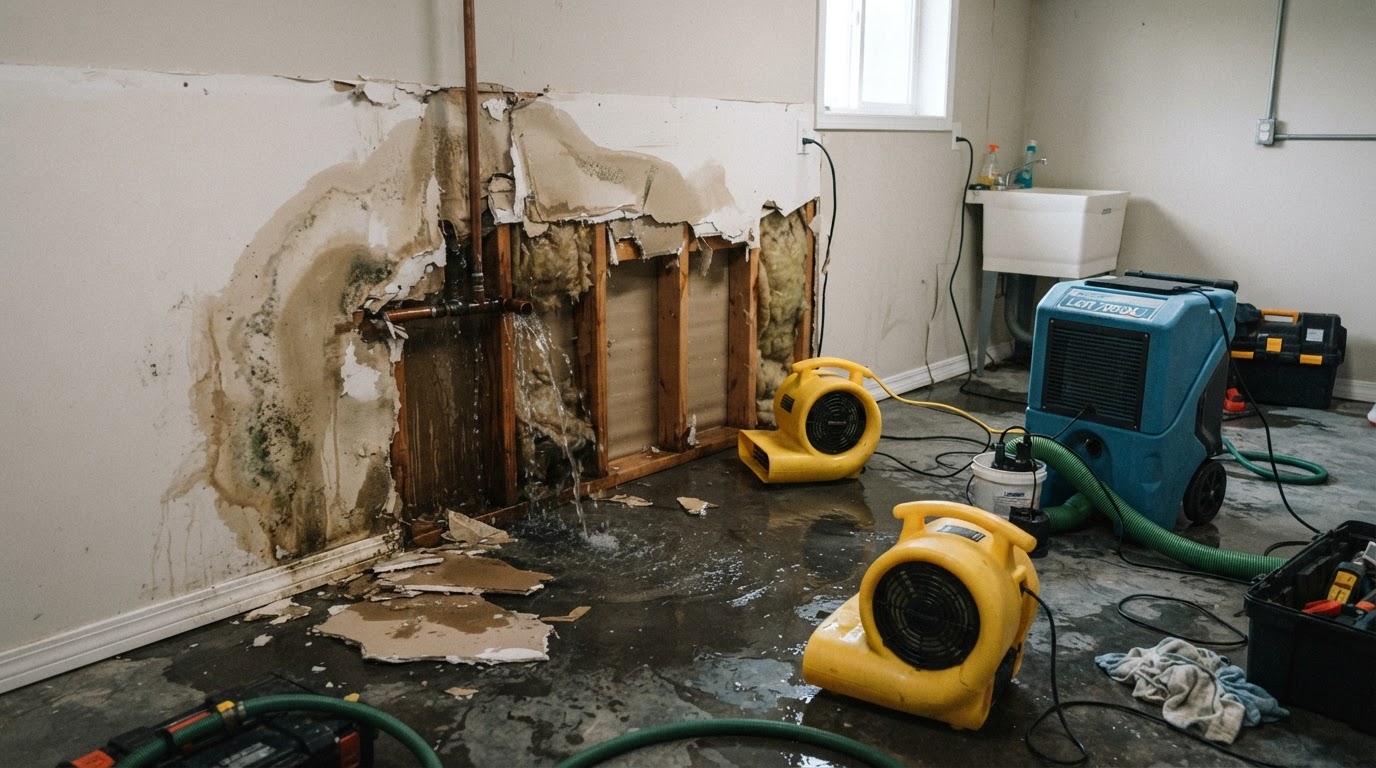
Water softener leak cleanup involves bypassing the softener system, extracting standing brine or hard water from garage or utility room floors, removing water from adjacent interior wall plates and drywall bays, and deploying industrial air movers and LGR dehumidification to dry affected concrete slabs, baseboards, and living spaces.
How Water Softener Leaks Affect Central Texas Properties
Because New Braunfels and Comal County tap hard water aquifers, residential water softeners operate continuously. Softeners cycle hard water through mineral tanks and discharge saline brine during nightly regeneration cycles.
When a water softener bypass valve cracks, a brine tank overflows during regeneration, or a drain line pops off its discharge fitting, water flows across utility closets or garage slabs. In many homes, garages share common walls with interior laundry rooms, kitchens, or entryways.
Water on a garage slab creeps under common-wall sill plates, soaking interior drywall, baseboards, and carpet padding in adjoining rooms. Prompt extraction stops saline water from corroding metal fasteners and rotting wood framing.
What should you do when a water softener leaks?
Immediately push the manual bypass valve on your water softener to isolate the unit from your main plumbing line. If water continues flowing, shut off your home's main water valve. Turn off power to the softener unit. Move boxes and stored items off wet garage or utility room floors, and call our water damage team to extract standing water and dry adjoining interior walls.
Call now to check immediate availability for water softener leak & overflow cleanup in new braunfels.
Call 830-356-3743Components & Areas Damaged by Water Softener Failures
Water softener leaks affect both utility areas and adjacent interior living spaces.
Garage Slabs & Utility Floors
Standing water saturates concrete slab pores, utility room tile, and wood utility closet framing.
Shared Wall Sill Plates
Water creeps under wood bottom plates on garage-to-home partition walls, soaking interior drywall.
Adjoining Room Flooring
Water spreading past utility doorways saturates adjacent laundry room laminate, hallway carpet, or entryway tile.
Brine Tank Overflow Areas
Saltwater brine from overflowing salt tanks can leave white mineral residues on garage floors and baseboards.
Utility Room Drywall & Baseboards
Sheetrock walls in utility closets absorb water through capillary action, causing paint blistering and swelling.
Stored Garage Belongings
Cardboard storage boxes and wood shelving sitting on garage slabs absorb standing water quickly.
Our technicians test moisture levels in both utility rooms and adjacent interior rooms to confirm water has not traveled into living spaces.
Our Step-by-Step Water Softener Cleanup Protocol
We follow a comprehensive 6-step process to extract water and dry utility areas and living spaces.
1. Inspection & Water Migration Mapping
We inspect the softener area and map water migration across garage slabs, utility closets, and interior adjoining rooms.
2. Softener Bypass Verification
We verify the softener bypass valve is engaged and main plumbing line pressure is stable before starting extraction.
3. Heavy Water Extraction
Truck-mounted or portable extraction units pull standing water off garage concrete slabs and utility room floors.
4. Interior Floor & Baseboard Drying
If water spread into adjacent rooms, we pull wet carpet padding and lift baseboards to extract water from wall cavities.
5. Industrial Air Movement & Dehumidification
High-velocity air movers and low-grain refrigerant dehumidifiers dry utility walls, concrete slabs, and interior framing.
6. Moisture Testing & Final Clearance
We monitor wood sill plates, drywall, and subfloors with moisture meters until dry baseline standards are restored.
Why Thorough Softener Leak Drying Matters
Standing water on garage concrete slabs easily migrates underneath interior wall plates into finished living areas. Ignoring a water softener leak often leads to warped interior baseboards, damp carpet padding, and musty closet odors.
Professional extraction and structural drying ensure that moisture is removed from both utility floors and hidden wall bays, preserving your home's structural framing and interior finishes.
Request water removal assistance for your New Braunfels property.
Water Softener Leak & Overflow FAQs
Answers to common questions about water softener leaks, brine overflows, and utility room water damage.
Why do water softeners leak or overflow?
Common causes include cracked control valve heads, clogged regeneration drain lines, worn O-ring seals, split bypass valves, or salt bridge jams that cause brine tank overflows.
Can water from a garage water softener get inside the house?
Yes. Garages sit on the same concrete slab as adjacent interior rooms. Water spreading across a garage floor easily seeps under common wall plates into interior closets, laundry rooms, or hallways.
Does brine or saltwater from a softener damage concrete or walls?
Saline water can leave white salt deposits on concrete and corrode metal wall fasteners. Prompt water extraction and freshwater rinsing prevent salt residue buildup.
How do I turn off water to a leaking water softener?
Locate the bypass valve on the plumbing lines behind the softener tank. Push or turn the bypass knob into the 'bypass' position. If the bypass valve fails, turn off your home's main water supply.
How long does it take to dry out a garage or utility room after a softener leak?
Drying concrete slabs, utility drywall, and adjoining interior walls usually takes 2 to 4 days of industrial dehumidification and air movement.
Do you repair or replace leaking water softeners?
Our primary service is water extraction, utility floor cleanup, and structural drying. We recommend having a water conditioning specialist or plumber repair or replace the softener unit.
Will homeowner insurance cover a water softener leak?
Most policies cover sudden and accidental water damage caused by water softener line bursts or tank ruptures, including interior floor and wall drying costs.
Need Water Softener Leak Cleanup in New Braunfels, TX?
Contact New Braunfels Water Damage Restoration now for prompt water extraction, garage slab cleanup, and interior wall drying.
New Braunfels Water Damage Restoration
830-356-3743